An Anti-Inflammatory Meal Plan Built on the Plate, Not the Supplement
“Anti-inflammatory” is slapped on everything from celery juice to $40 powders. What actually works is far less glamorous: a varied, mostly-plants pattern with fatty fish, olive oil, and whole grains — the same way of eating the healthiest populations on earth already follow.
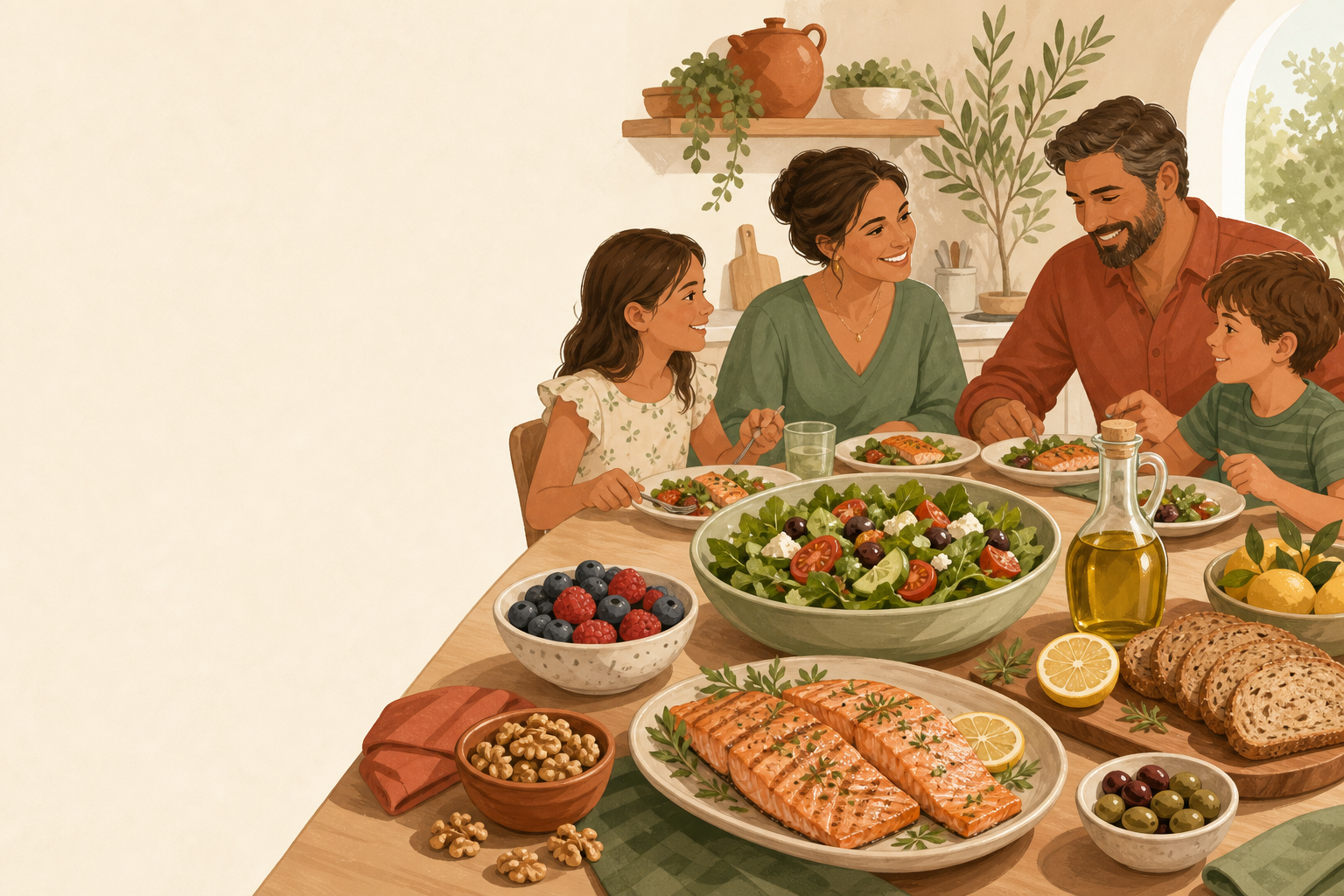
The plate, not the powder
Chronic, low-grade inflammation simmers in the background for years — and you can’t feel it day to day, which is exactly why the everyday choices matter. You don’t fix it with one magic food; you nudge it with the overall pattern of what you eat. The evidence points to a way of eating, not a hero ingredient, and the pattern with the strongest backing is essentially the Mediterranean style. Here is a look at a typical week built on that pattern.
Showcase Menu
Your 4-Day Sample Anti-Inflammatory Plan
A taste of what Chef Wize generates for your personalized weekly menu
Day 1

Berry-Almond Overnight Oats
Rolled oats soaked in almond milk, topped with berries and toasted almonds.

Mediterranean Chickpea & Greens Salad
Herb-tossed chickpeas over leafy greens with olives, tomato, and olive oil.

Herb-Crusted Salmon with Farro & Broccoli
Omega-3-rich salmon with lemony farro and roasted broccoli.
Day 2

Greek Yogurt Parfait with Walnuts & Berries
Creamy yogurt layered with walnuts, flax, and a tumble of fresh berries.

Lentil & Roasted Vegetable Bowl
Warm lentils over roasted vegetables with a bright lemon-tahini drizzle.

Grilled Chicken with Quinoa Tabbouleh
Char-grilled chicken breast with a parsley, tomato, and quinoa tabbouleh.
Day 3

Spinach & Feta Veggie Scramble
Eggs scrambled with spinach, tomato, and a crumble of feta.

Sardine & White Bean Salad over Greens
Omega-3 sardines with creamy white beans, red onion, and olive oil.

Baked White Fish with Lemon & Roasted Tomatoes
Tender white fish baked with olive oil, lemon, and blistered tomatoes.
Day 4

Chia & Flax Porridge with Cinnamon
Chia and ground flax simmered with cinnamon and topped with fruit.
Leftover Lentil Bowl
Day 2’s lentil bowl, refreshed with a squeeze of lemon and fresh herbs.

Mediterranean Turkey Meatball Bowls with Farro
Baked turkey meatballs over farro with cucumber, herbs, and olive oil.
Why WizeMeals Works: The Pattern Is the Point
The evidence for anti-inflammatory eating keeps pointing to the same unglamorous conclusion: it’s a way of eating, not a hero ingredient. Build the plate around plants, lots and varied — leafy greens, berries, and colorful vegetables bring the antioxidants and polyphenols that do the heavy lifting, and variety matters more than any single “superfood.” Add fatty fish a couple of times a week: the omega-3s in salmon, sardines, and mackerel help counter the body’s inflammatory compounds.
Good fats carry the flavor and the science. Olive oil, walnuts, and flax — especially ground flax — show up again and again in the research. Whole grains beat refined: farro, oats, and brown rice instead of white-flour everything. And the two things to ease up on, red and processed meat and added sugar, are the same ones research consistently ties to more inflammation, not less. That’s the whole plate. No powder required.
Here’s the elegant part: this isn’t a separate diet you bolt on. It’s the same foundation that supports a lot of specific health goals, which is why it shows up across our other plans — the fiber-rich, whole-food plate is the backbone of the diabetes-friendly week, lower-glycemic anti-inflammatory eating is central to the PCOS plan, and this IS the heart-healthy plate: fish, olive oil, plants, less salt and saturated fat.
And you don’t overhaul everything on Monday. You nudge: add a fish night, make half the plate plants, swap one refined grain for a whole one, cook with olive oil and snack on nuts. Small, repeatable, sustainable. Boring-and-repeatable beats exciting-and-abandoned every time.
Frequently Asked Questions
What does anti-inflammatory eating actually mean?
Chronic, low-grade inflammation is linked to conditions like heart disease, type 2 diabetes, and arthritis. The eating pattern with the strongest evidence is simple: build meals around varied plants, fatty fish a couple of times a week, good fats like olive oil and nuts, and whole grains — while easing up on red and processed meat and added sugar. No hero ingredients, no forbidden-food lists.
Do I need supplements or superfoods to fight inflammation?
No. The research points to a way of eating, not a powder. Olive oil, walnuts, flax, leafy greens, and colorful vegetables do the heavy lifting when they show up regularly. If a product needs a $40 jar and a juice cleanse to explain itself, that’s marketing, not evidence.
Is this the same as the Mediterranean diet?
Essentially, yes. The Mediterranean style of eating — abundant plants, fish, olive oil, and whole grains — is the pattern with the strongest anti-inflammatory evidence. It’s also the same foundation that supports many other health goals, which is why you’ll see it show up across our diabetes, PCOS, and heart-healthy plans.
How fast will I notice a difference?
You won’t feel chronic inflammation day to day, which is why the everyday choices matter. This isn’t a cleanse — it’s a pattern you nudge into place: add a fish night, make half the plate plants, swap one refined grain for a whole one. Boring-and-repeatable beats exciting-and-abandoned every time.
Learn More
Want the full explainer, the science, and the four-step starter plan? The Anti-Inflammatory Plate: What It Means, Without the Hype — what the evidence says, and how to build the plate.